Monday, November 16, 2026: Serving the Seventh Generation: sometimes the most radical thing you can do is plant something you’ll never see fully grown.…

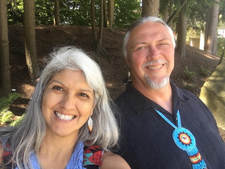
Randy Woodley—theologian and co-founder of Eloheh Indigenous Center for Earth Justice reflects on his unique call in service to others:
Every spring, my wife Edith and I kneel in the dirt of our ten-acre farm in Oregon’s Willamette Valley and do something that looks, to the untrained eye, like nothing much. We plant seeds. Some of them are varieties that Indigenous peoples have been keeping alive for hundreds, maybe even thousands of years—seeds passed from hand to hand across generations, carried through removals and relocations, hidden in pockets during forced marches, saved when everything else was taken. We put them in the ground, we water them, and we wait.

It doesn’t look like revolution. It doesn’t look like resistance. It looks like two people with dirt under their fingernails doing small work in a world full of enormous problems.
But after decades of this work, I’ve learned sometimes the most radical thing you can do is plant something you’ll never see fully grown.…
What is ours to do? It’s whatever is right in front of us, done with full attention and love, connected to the web of relationships that sustains everything. For some people, that means running for office or organizing their neighbors. For others, it means tutoring a child or cooking for the elders. For Edith and me, it means keeping seeds alive and welcoming whoever shows up at the farm. And here’s what I want to say to anyone paralyzed by the enormity of what’s wrong:

My ancestors understood this. Not everyone was a medicine person. Not everyone was a warrior or a chief. Some people made baskets. Some people told stories. Some people tended fires. The community needed all of it, and nobody’s gift was less sacred than anyone else’s.
Indigenous peoples traditionally made major decisions with the seventh generation in mind. That’s roughly 175 years into the future. Think about that for a moment. I’ve planted oaks that I will never see fully mature. When you plant a seed, thinking about people who won’t be born for another century and a half, it changes your relationship to time, to despair, and to what counts as success.
I will not see most of what I’m planting for. That’s fine. That’s the work. The people who for generations saved the seeds we plant at Eloheh didn’t save seeds for themselves. They saved seeds for us—through removals, through boarding schools, through every attempt to erase them. And we save seeds for people we’ll never meet.
That’s what is ours to do. Not to solve everything, but to plant faithfully. Not to despair at the harvest we won’t see, but to trust that the seeds are good, the soil is alive, and the Creator is still at work in the dirt and the mess of it all.

About Eloheh:
Eloheh is an interfaith, non-sectarian organization, with a long history of allowing people of all faiths, including churches and denominations, to learn an Indigenous worldview, decolonizing and indigenizing theologies, and new approaches to leadership and mentoring.
Our spirituality begins with the land, where we demonstrate our relationship with the whole community of creation. At Eloheh we embody our spirituality and the learning happens in manifested and tangible ways.


Comments
Post a Comment